
Choosing the Right Base Vehicle for Your Campervan Conversion
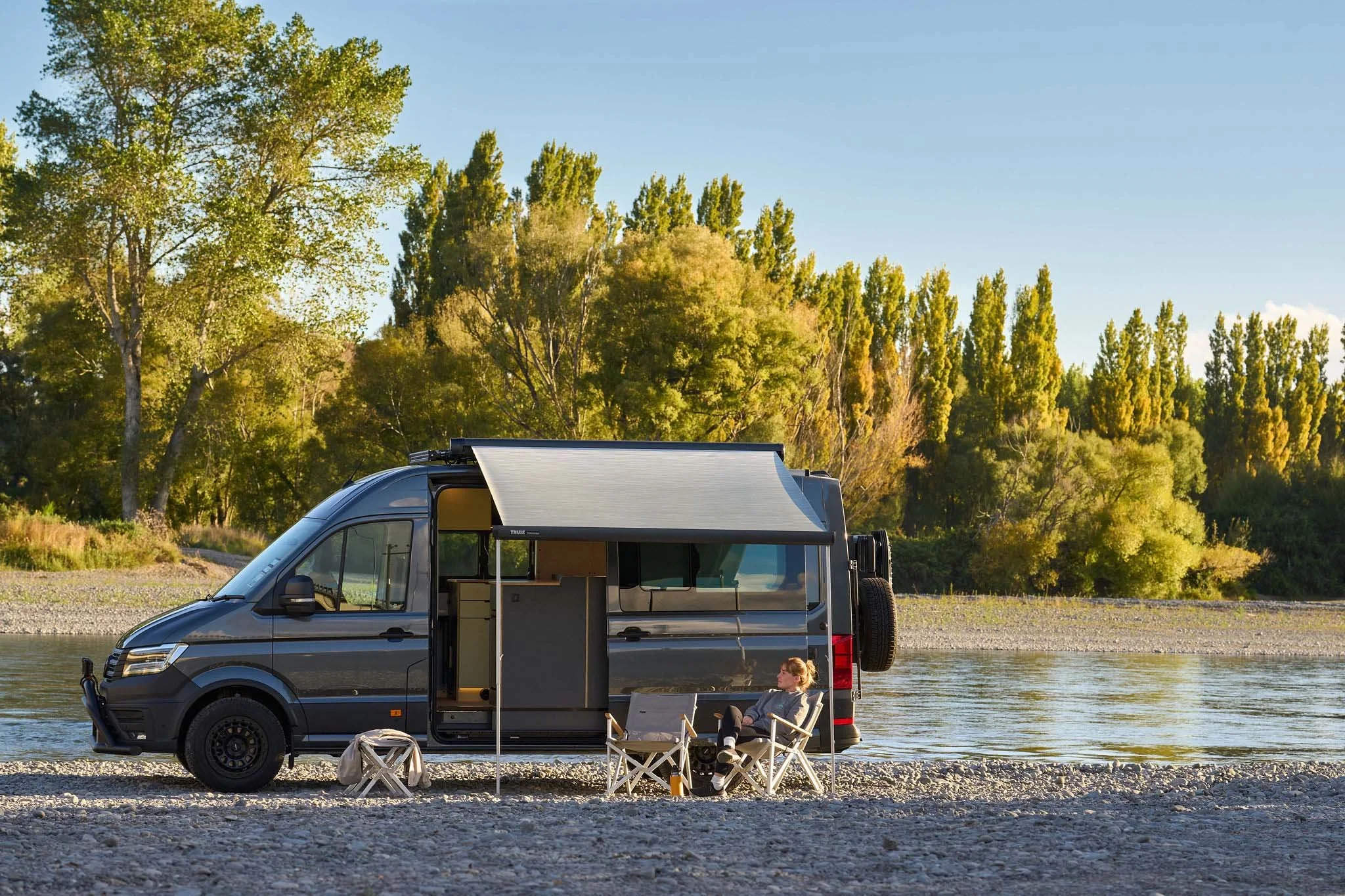
So, you’ve decided you want a campervan. You’ve been scrolling through Instagram, saving campervan layouts, and perhaps even picking out the upholstery. While we encourage you to dream big, there’s a critical decision you have to make before the first sheet of plywood is cut: what van will you buy?
At Matt and Dan’s, we’ve seen it all. We’ve crawled into every corner of almost every campervan on the market. We know that while the interior aesthetics make the photos, the bones of the van determine your lifestyle on the road. The right van feels like a home; the wrong one can feel like a compromise every time you try to park or climb a steep South Island pass.
In this guide, we’re breaking down the four most common campervans in New Zealand: the Mercedes-Benz Sprinter, the Volkswagen Crafter, the Ford Transit, and the Toyota Hiace. We’ll compare them across four vital pillars: size, fuel economy, reliability, and buildability.
The Mercedes-Benz Sprinter: The Industry Gold Standard
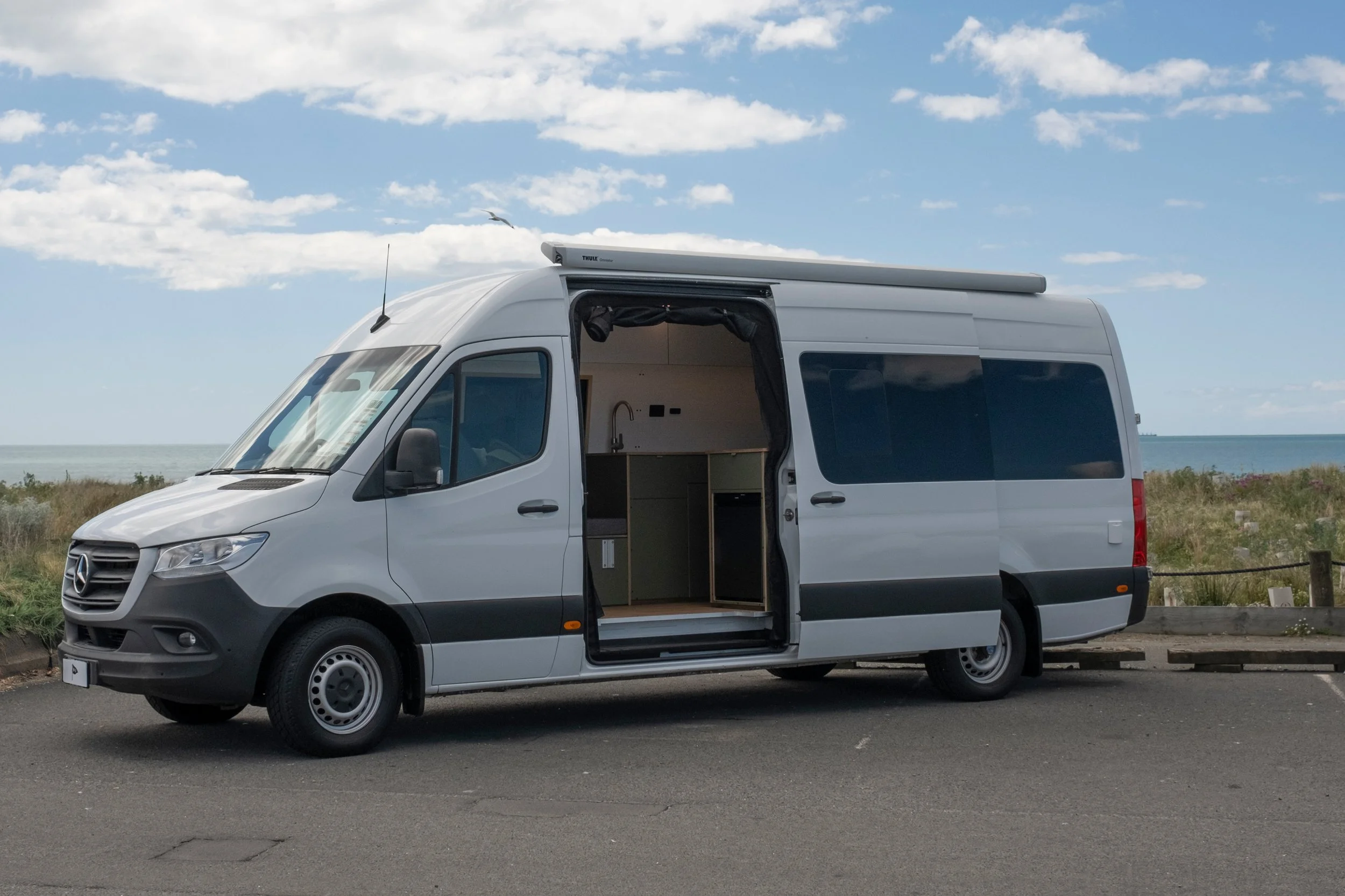
The Sprinter is often the first vehicle people think of when they imagine a professional campervan conversion. It’s roomy, luxurious, and the top pick for many vanlifers.
Size and Layout
Height and length options keep the Sprinter top of mind for campervan conversions. For clients looking for a roomy build, it’s hard to look past the LWB (long wheelbase) with a high roof. This combo allows for a full fixed bed, kitchen galley, and possibility of a shower/toilet without feeling too cramped. The MWB is also one of the most popular models we convert here at Matt & Dan’s, but the LWB affords more options for a shower/bathroom or seating more than two people.
Fuel Economy
Modern Sprinters (post-2014) are surprisingly efficient for their size. You can expect roughly 9L to 11L per 100km depending on the load and driving conditions.
Reliability
The engines are workhorses designed to do 500,000km+. However, Mercedes-Benz parts and specialised European mechanics come at a premium in NZ. This can make remote breakdowns a bit tough, where parts can be hard to find and take a long time to source, leaving you stuck where you are.
Regular maintenance is non-negotiable on a Sprinter; skip a service, and the Sprinter will let you know.
Buildability
Due to the Sprinter’s popularity here and abroad, there’s great resources for building out and problem-solving. Their roomy size helps, too. The market for off-the-shelf components is large, so additions like swivel seats and roof racks are easy to find.
Matt & Dan’s exclusive: Our partner company, Oriworks, provides a full range of exterior products for Sprinters. From rear door carry systems, ladders, and integrated towbar systems, we have a range of products we can offer, in-house. Enquire with us for more details.
Some examples of Matt & Dan’s Mercedes Sprinter builds
Check out some of our Sprinter builds, like Adam and Bree’s Mercedes Sprinter 4X4, Jane’s Mercedes Sprinter, Nick and Martina’s Mercedes Sprinter 4X4, and Michael’s Sprinter LWB Turnkey.
The Volkswagen Crafter: The Modern Challenger
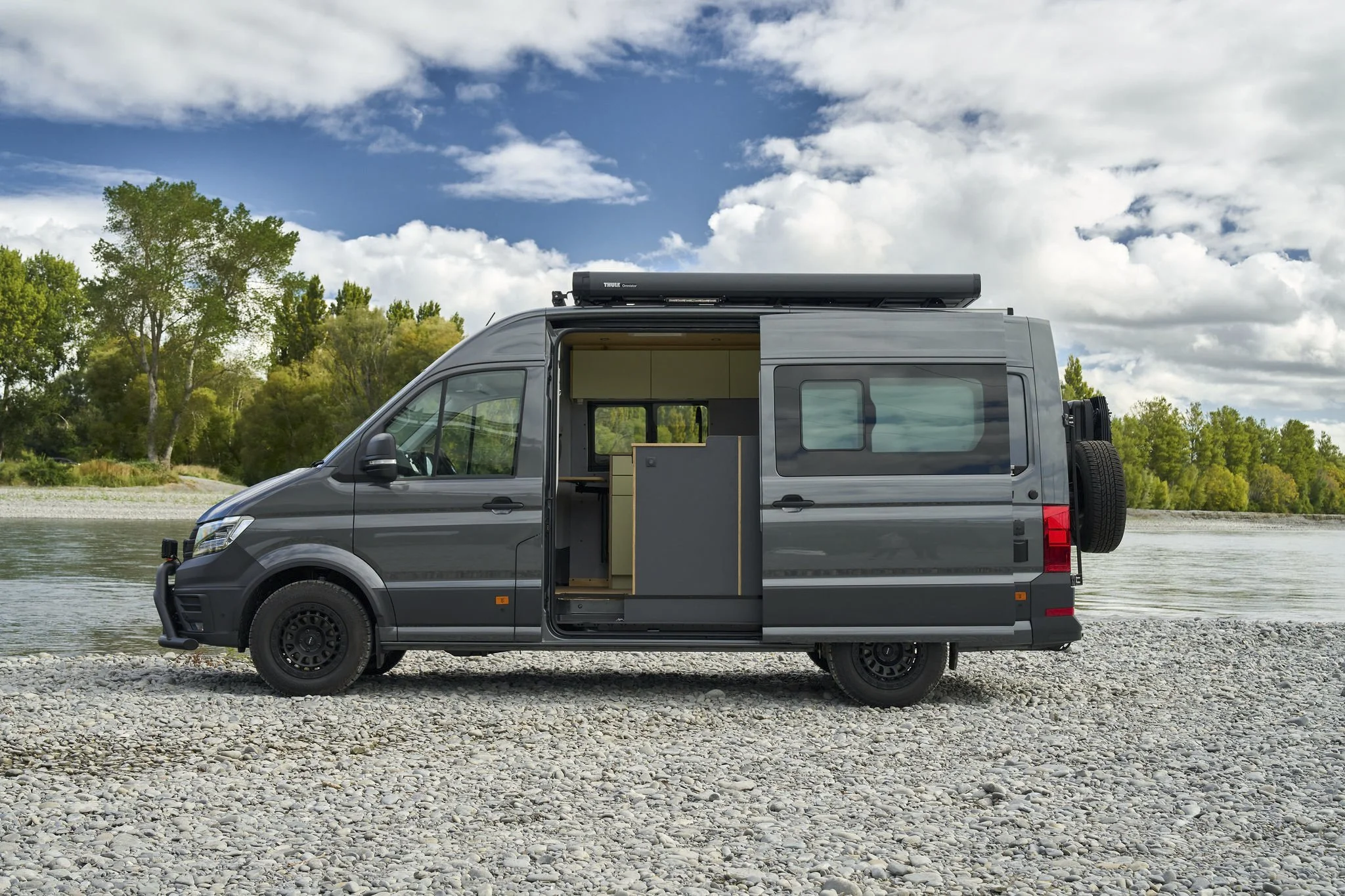
The New Gen VW Crafter (2017 onwards) has quickly become another favourite at Matt and Dan’s.
It was designed from the ground up to be the most driver-centric van on the market.
Size and Layout
The Crafter is very similar in size to the Sprinter. If you’re tossing up between the 2WD and 4WD, it’s important to note the 4WD floor sits higher to achieve the needed clearance under the chassis. This is great for 4WD-ing, but it cuts into the standing height, so be prepared to hit your head if you’re over 6 foot.
Fuel Economy
The 2.0L TDI engines are incredibly efficient, often averaging 8.5L to 10L per 100km.
Reliability
VW has invested heavily in making the Crafter car-like to drive. The safety tech like Adaptive Cruise Control and Lane Assist are top-tier. Reliability is high, but keep in mind, it requires high-quality European-spec oils and parts just like the Sprinter. Services can be more cost-effective, though.
Buildability
A Crafter’s buildout is similar to a Sprinter’s—it’s predictable and reliable. One advantage to a Crafter is a 3-seater option is more common, but keep in mind this means you can’t have swivel seats.
Some examples of builds
Check out some of our VW Crafter builds like James and Amanda’s XLWB VW Crafter, Andrew and Reza’s VW Crafter, and Molly’s VW Crafter.
The Ford Transit: The Practical All-Rounder
If the Sprinter is the luxury suite and the Crafter is the modern apartment, the Ford Transit is the reliable family home. It’s a pragmatic choice that has surged in popularity across NZ, especially for those who want modern tech without the European price tag.
Size and Layout
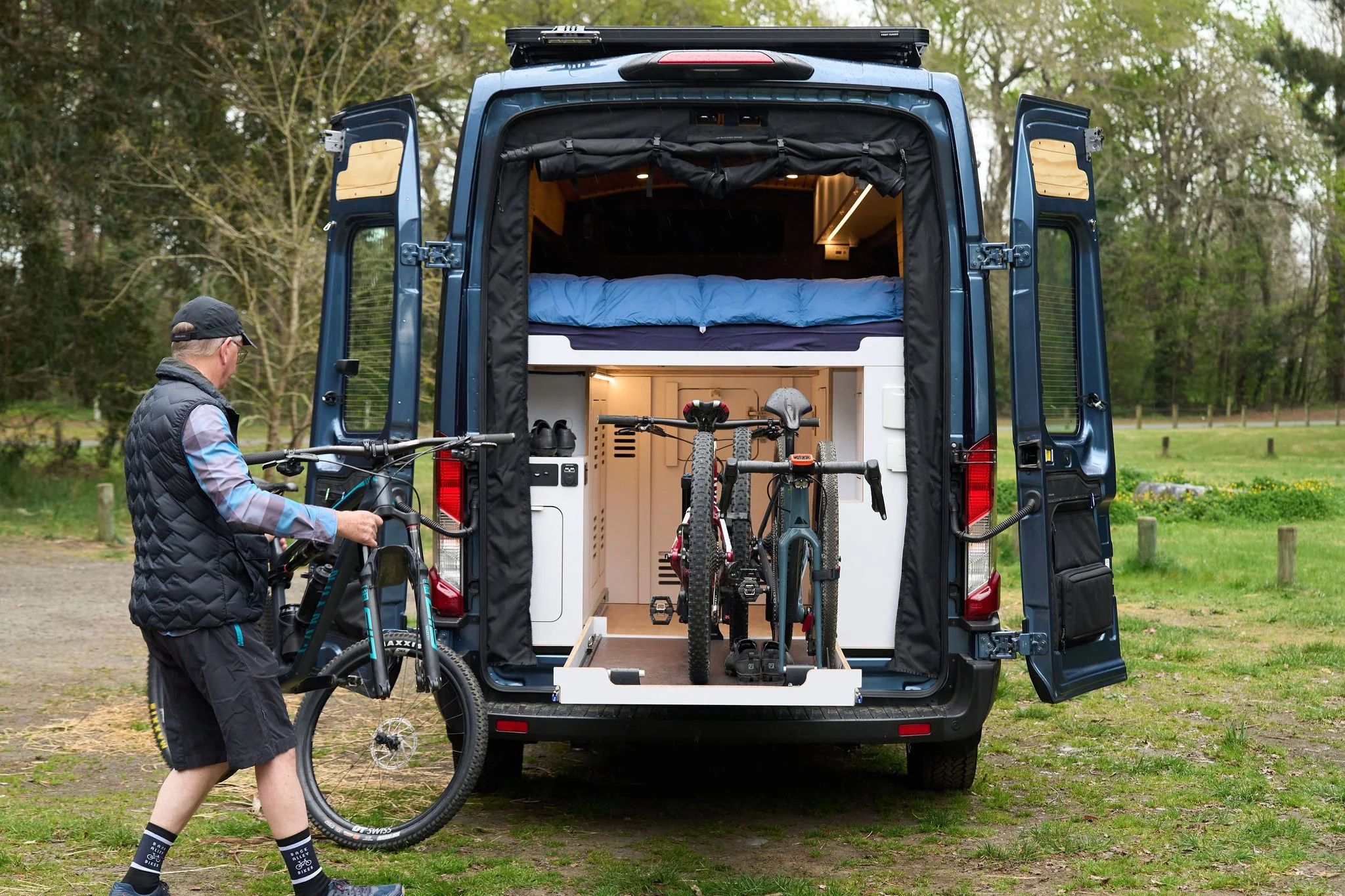
The Transit offers excellent standing room in its High Roof configuration, and its near-vertical walls and box shape give the interior a more spacious feel. The high roof on the Transit also means it has the tallest standing height out of all the vans—great for our tall friends!
Fuel Economy
The modern 2.0L EcoBlue diesel engines found in most Transits are relatively frugal. You can expect to sit comfortably between 7.5L and 9.5L per 100km.
Reliability
Parts for Fords are generally more affordable and easier to source than their German counterparts in New Zealand. The Transit Van 350L High Roof model also offers an AWD (All-Wheel Drive) option, which is a win for those wanting to tackle gravel roads or snowy ski-field car parks with more confidence.
Buildability
Transit walls are remarkably straight, which simplifies the framing and cabinetry process significantly. The square canvas means less time scribing timber to weird curves and more time building. There is also a rapidly growing market for Transit-specific accessories in NZ, from roof racks to swivel seat bases. Most Transits come standard as 3-seaters—great for an additional passenger, but that means you can’t have swivel seats.
Some examples of builds
Check out some of our Ford Transit builds like Trevor and Carmen’s AWD Transit, Rachel’s Transit, and Sheryl’s Transit.
The Toyota Hiace: The Kiwi Icon
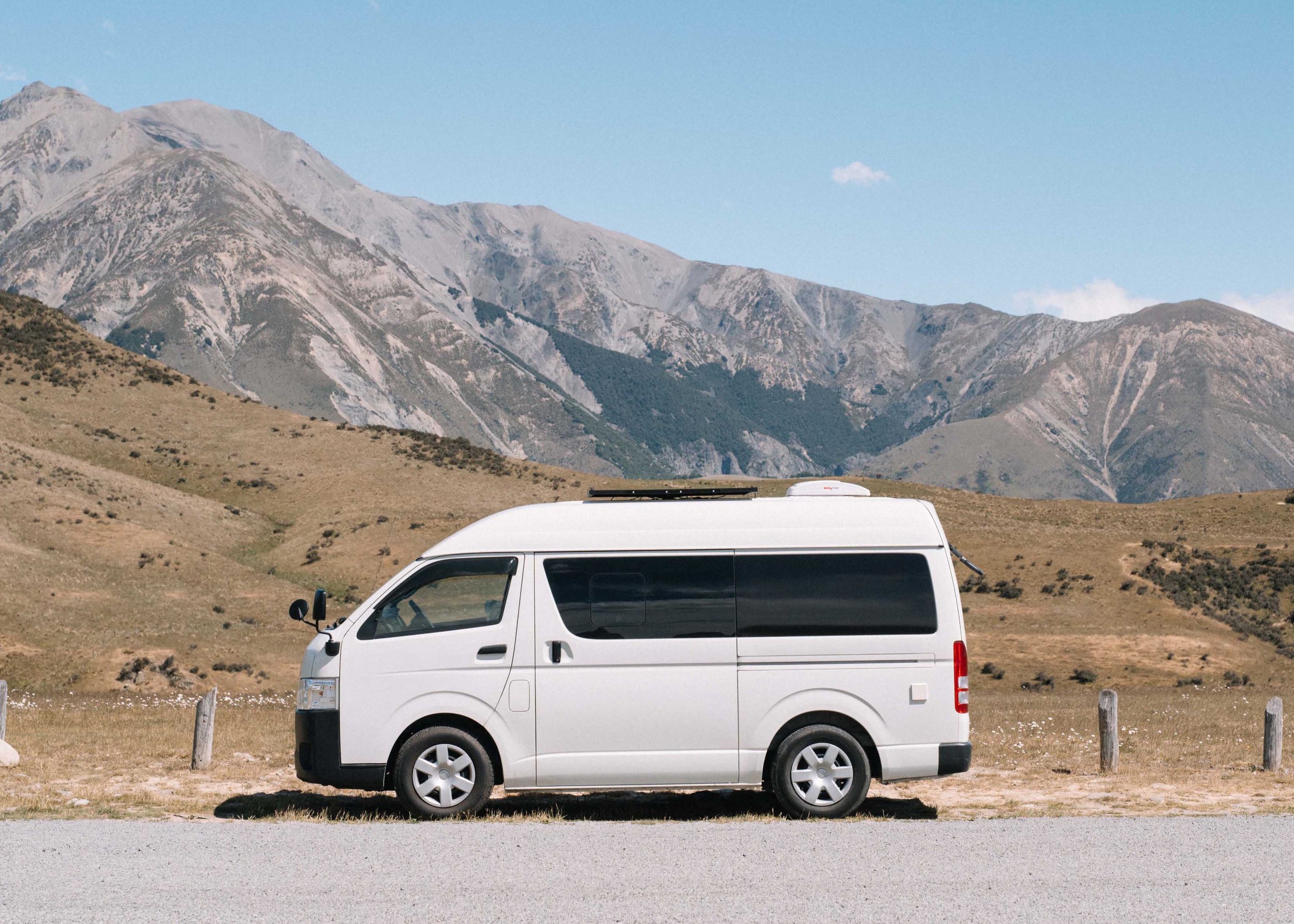
The Hiace is the backbone of New Zealand’s commercial fleet. Toyotas, in general, are everywhere, and the Hiace has been a beloved work and play model for generations.
Size and Layout
If you are looking for a stealth van or a daily driver, the Hiace is it. However, space is at a premium. Most Hiaces (especially the standard LWB) do not allow for a standing height for the average person. If you’re happy to trade crouching for a good daily driver, the Hiace is a great option.
The Exception: The Hiace ZX or Minibus models offer more length and height, but they still lack the cavernous volume of a Crafter or Sprinter.
Fuel Economy
The Hiace is a mixed bag. The older 3.0L D4D engines are bulletproof but can be "thirsty" when fully loaded with a heavy camper interior, often sitting around 10L to 12L per 100km. The newer 2019+ models have improved this significantly.
Reliability
This is where the Hiace wins. You can find a mechanic in the smallest town who has the parts and the knowledge to fix a Hiace. If your goal is to explore the deepest corners of New Zealand with total peace of mind, a Toyota is hard to beat.
Buildability
Building in a Hiace is like solving a puzzle. Because space is limited, every millimeter counts. You have to be more creative with multi-functional furniture (like a bed that converts into a table). It’s more challenging to build in, but the result is a cozy, nimble campervan that can drive with ease. Keep in mind though, we can’t install roof extensions to vans, so the height of your van is…the height of your van.
Some examples of builds
Check out some of our Toyota Hiace builds like the Hut for our Parker rental fleet, George’s Hiace ZX conversion, and Nick’s Hiace conversion.
Which one is right for you?
Choosing your base vehicle comes down to one question: How do you plan to use it?
Choose the Sprinter if you want a proven, prestigious platform with plenty of space and a massive community of fellow owners to lean on for inspiration, plus off-the-shelf options and our own custom range of exterior products.
Choose the Crafter if you value interior width, modern safety technology, and a "car-like" driving experience for those long hauls. The Crafter is a great option if the Sprinter price tag is out of reach.
Choose the Transit if you want a sensible workhorse that is easy to service anywhere in NZ and offers an affordable price tag.
Choose the Hiace if you want a go-anywhere vehicle that is easy to park, cheap to maintain, and will likely outlive us all.
At Matt and Dan’s, we specialise in turning these empty shells into bespoke homes. Whether you’ve already got a van in the driveway or you’re still scouring TradeMe, we’re here to help you navigate the technical hurdles of electrical systems, plumbing, and cabinetry.
Ready to start your build? Get in touch with us today for a consultation, and let’s get you on the road.
